“Great” – like “quality” – is a tough word to pin down. We think we know greatness when we see it, but frequently struggle to explain our rationale. A friend of mine passed away last week after a two-plus-year fight against an insidious brain tumor.
Although he had his flaws, Lou Goodman was a great man.
There. I said it. Now here’s where I explain, mostly to myself, why I think so.
What is “great”? It’s related to “good,” but not part of the good-better-best triad. It has no natural antonym, like “bad” is to “good.” Merriam-Webster has 11 definitions for “great” as an adjective; it means everything from “large in size” to a more-distant relative. As for what qualities make a person great, three of those definitions stand out:
- Eminent or distinguished;
- Markedly superior in character or quality; and
- Remarkably skilled.
So many parts of Lou’s professional career match up with those three standards of greatness. As the CEO of the Texas Medical Association for 22 years, Lou was “eminent and distinguished” – he stood out – among his peers around the nation. The more experienced among them quickly recognized Lou’s talents and gladly let him lead. The newcomers forged his alliance. A generation of health care leaders sought his wisdom, trusted his counsel, and followed his example. The physicians whom he so greatly admired and for whom he toiled so mightily in turn held Lou in the highest esteem.
Though Lou was known to use bluff and bluster to his advantage, he had a lot of there there. No doubt about his “markedly superior qualities.” Lou was very smart (he earned A-plusses, not just As, in graduate school), a quick study on the complex issues medicine faces. He demanded solid analytics because that’s how he earned his PhD and then built his career. He respected those of a similar ilk. He saw right through lightweights and blowhards. Lou wouldn’t suffer a fool, and many a fool suffered his disdain.
When it comes to “remarkable skills,” I believe each of us has at least a bit of greatness within. It may seem insignificant. My mom, for some reason, always prided herself on how well she folded hospital corners in a bed sheet. Others’ great skills may be more easily quantified and recognized, even if limited in scope – hitting a baseball, blowing a horn, writing elegant code, discerning a muffled heart murmur.
But it’s the breadth, the sheer area, of competencies in which someone is “remarkably skilled” that makes us brand a woman or a man as great. Such was Lou Goodman.
Lou was a great leader. The volume of books and research on leadership testifies to the expanse of skills the best leaders must master: personality, strategy, attitude, fortitude, confidence, humility, patience, vision.
I’ve seen Lou expertly ride the often choppy waves of each of those character traits ... except humility. I’ll leave it to his family and closer friends to disclose if Lou was humble in private. He certainly was a proud man – the opposite of humble – but I’d argue that pride fueled his drive for success. Not only did he hate to lose; he hated to be seen as a loser. Even absent humility, he was still a great leader. None of us – even the pantheon of bests like Lincoln and Churchill that Lou so admired – is perfect.
Lou made few mistakes, and his pride made him loath to admit them. I heard him acknowledge one or two, punctuated with the advice/warning, “Don’t ever make the same mistake twice.”
Lou could read people amazingly quickly – and usually quite accurately. He could tell friend from foe, genuine from poser, clean from dirty, valuable from timewaster, trustworthy from dodgy. This skill fed Lou’s ultimate strength: he was a master at forging long-lasting, tight relationships. So many of his friends were besties. So many associates were confidants.
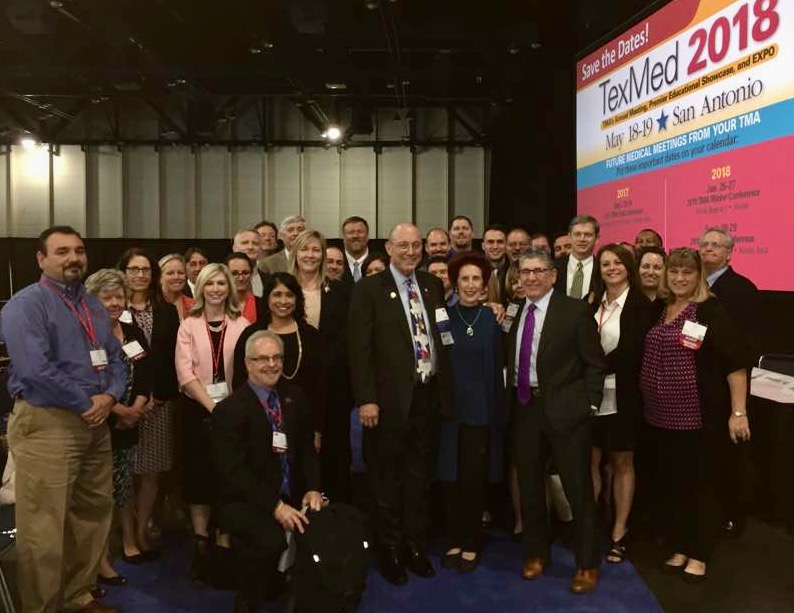
At the ceremony last year to rename the TMA building after Lou, a U.S. congressman and a state senator were the keynote speakers, earnestly laying on the praise. Between them, they had more than 40 years of public service. They were close enough that Lou could call them any day for advice, and they were close enough that they frequently called him for advice.
Lou didn’t ask for favors; he convinced you it was in your best interest to do what he wanted. And then he returned the help. It was cement. Neither felt put out. Each anticipated the next opportunity to help.
If you don’t know about TMA, it’s the state professional organization that represents more than 53,000 Texas physicians and medical students. Been around since 1853. Lou regularly reminded us, “this is the doctors’ organization. They are the ranchers, we’re the ranch hands.” This simultaneously empowered and protected Lou and the people like me who worked for him. The physicians set the policy objectives, but we were trusted to use our own ideas and skills to get us there. It made TMA a great place to work, enabled Lou to hire some absolutely outstanding men and women, and kept many of them working for the doctors for 20, 25, 30 years or more. He loved to put his best staff on the spot, knowing they’d perform well, giving them a chance to shine in front of others.
Lou enjoyed a good argument, especially one-on-one, across the desk or standing in a quiet corner. Extra points for $5 words and historical references. He gave staff the latitude to disagree with him, to make our case, to use the expertise that he knew we had and he didn’t. (That’s why he hired us.) They weren’t always resolved right away. Some went on for months, with frequent jibes and other reminders of the unsettled business. On most questions of any import, one of us would end up agreeing with the other, or we’d devise an even better solution together. “You do know who signs your paycheck, don’t you?” was usually bluster – but a not-so-subtle reminder. Very, very rarely did Lou play his “because I’m the boss” card.
And Lou Goodman was a good man. Maybe not a boy scout – he could be stubborn and he had his prejudices – but he was honest and kind, sincere, a loyal friend. Several times I recall we undertook the tedious process of evaluating each of TMA’s numerous programs and projects and services, looking to trim those that were no longer needed. When it came down to it, though, Lou couldn’t pull the trigger. “Programs are people,” he’d say.
It’s been odd these past two years as we saw less and less of Lou, as we had less and less of him. And now he’s gone. But not. I hear so many of my colleagues speak a Lou-ism or lay out a Lou-like plan or tackle adversity with Lou-ish gusto and determination.
We have a new boss now. He inherited an excellent team. And amid the unexpected challenges of COVID-19, he led us and motivated us to be everything that Lou saw in us, to give everything that Lou trained us to give.
And, so, the final defining trait of a great person – a legacy. Check.
Lou Goodman was a great man. Per that Texan-ism that Jersey Lou adopted, “It ain’t braggin’ if it’s true.”


.jpeg)
.jpeg)
.jpeg)